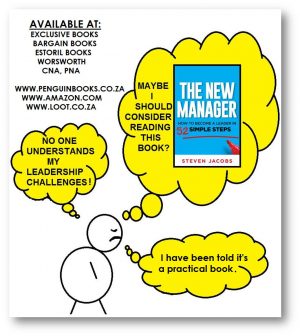
The New Manager – Ian Mann’s review of my book

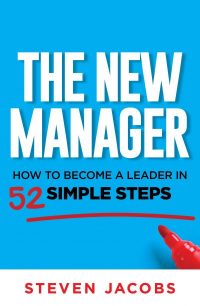
The New Manager: How to become a leader in 52 simple steps, by Steven Jacobs

TWO colleagues walked past my desk as I was reading this week. When they asked what I reading, I told them it was a primer for managers and one said: “You must be so bored reading another one!” I explained that this was for a first-time manager, someone appointed to be a team leader of a group in a call centre, for example.

One colleague responded: “I wasn’t given any advice when I got my first position, I didn’t have a clue what I should do!” This began the conversation between the two women, one of whom retired as a mainboard director of a top 100 listed company, while the other had worked in and on multinationals, internationally. Both saw the enormous value in Jacob’s no-frills, down-on-the-floor, real guidance for first-time managers.

The book is a collection of 52 pieces of advice and insights, each a three-page chapter with “Reflection Questions” at the end. The topics range from how to gain credibility and bond with your team, to how to lead in the storm. It covers how to develop your people, manage their performance, and evaluate your own performance.

The book opens with the issues one could face in the first three months of this new role. On Jacobs’ first appointment, a team member confronted him sternly, saying: “Steven, I want you to know, I don’t like you.” Pause here, and consider what to do in this situation. You are young and thought you were appointed because everyone loves you.

His response: “I am sorry you feel that way; it’s okay that you don’t like me. You don’t need to like me, but going forward I would like your commitment that you will deliver on your business objectives. I commit to this, too.” This is an important lesson; not everyone will applaud your appointment and handling this well will set the right tone for your tenure.

It leads directly into the next key issue: knowing as much as you can about the people you work with and their personal circumstances. With this knowledge, can you answer the main question: Why have I been appointed? The only answer is – to develop each person, and the team as a whole.

‘Control freak’ behaviour

The appointment to a leadership role is so often mistaken as being a reward for hard and competent work, with the right to relax into “the boss” position. This is a trap. What earned you the leadership position was your diligence, ability and hard work. That is exactly what you are being expected to continue exhibiting. Misunderstanding this expectation leads to arrogance, ‘control freak’ behaviour, and the popularity drive of a campaigning politician.

In everyone’s life there are people you love and who love you, with the inevitable result – a high level of commitment. The “love” of your staff required in the workplace is essentially the same: “the unselfishly loyal and benevolent concern for the good of another” (Merriam-Webster’s definition).

A leader who really loves her team will correct them (in their best interests) and help them succeed. The true measure of leadership is not how many promotions you have received, but how much your people grow through your guidance, Jacobs points out. That is real caring, and “If your team really knows that you love them, they’ll go the extra mile,” Jacobs notes.

Inevitably, things will go wrong in business – conditions over which the leader has no control will turn unfavourably. It is at times like this that good leaders excel and bad ones fail. If the leader shows panic, how can he possibly lead the team out of trouble?

Good leadership requires that the leader appears to calmly lead the team out of the storm, despite what he is feeling inside. Being “authentic” and letting one’s fears be exposed is hardly the hallmark of good leadership. “No matter how you feel,” Jacobs exhorts, “when you walk through those doors and others see you, be positive!”

Team leaders are often required to judge people, and not fully knowing the situation can lead to painful mistakes. Without watching the entire movie, it is impossible to accurately predict the ending, and it is no different in the workplace. You need to know the whole story before coming to a conclusion.

Being biased by a relationship you have with one party can result in a grossly unfair decision for the other party. Overriding this bias and displaying wise leadership will have your team trust you, knowing you are fair in all situations, no matter who is involved.

No one can be a leader if they cannot be a follower. “When leaders respectfully follow the ones above them, they set an example for others to copy,” says Jacobs. Too many people believe they are more competent than their manager, but if your team is aware of this, you are setting a poor example for them.

Leaders clearly cover the full range from the inspiringly competent and caring, to the exact opposite. However, in the interests of one’s own team, the leader needs to always show respect for their manager’s position, irrespective of the manner in which they lead.

In the introduction, Jacobs explains: “Now the big day has arrived (you have been appointed team leader,) you know the job, you know what has to be done, and you want to make a good impression. It’s a step into the unknown, but (this book,) The New Manager will be your mentor 24/7.” Having read the book carefully, I already have a list of people I am going to recommend it to. Included are members of my family, new managers in companies I am invested in, and client companies.

Jacobs has produced a valuable book – use it if you are at the beginning of your career, or share it with those who are.

Readability:    Light +—- Serious

Insights:        High –+– Low

Practical:        High -+— Low

* Ian Mann of Gateways consults internationally on leadership and strategy and is the author of Strategy that Works. Views expressed are his own.

http://www.fin24.com/Opinion/book-review-how-to-build-a-dream-team-20160830
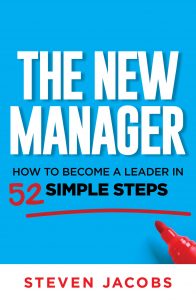
cropped-new-manager-cover.jpg

Why not get help as a leader?

The reality is that every leader will need help at some point in their leadership journey. Where does one get this help? Leaders will speak to family members, friends, other leaders and some may even speak to complete strangers about their frustrations.

imageThe reason they do this is that they are unable to crystallize their thoughts on the way forward and as such they verbalize their challenge in order to get help from a listening ear. In sharing they are hoping that they will get some sage advise that will change their situation.
Depending on the levels of experience and expertise of the one listening they may very well get the answer they are looking for or they may actually get some pretty bad advice. The key for the leader is to ask the question, “Is this the appropriate person to speak to and are they qualified enough to speak into my situation?”.

It amazes me at how easily people take advice from anyone. They may think it’s harmless however there is no guarantee that it is in fact harmless. There is the story of Solomon’s son Rehoboam who refused to listen to the advice of the elders who had much wisdom (1 Kings 12 verse 8) and rather chose to listen to the younger men. This backfired completely and he lost so many kingdoms as a result of taking the wrong persons advice.

How is this possible? How can the son of one of the wisest men to live make such a schoolboy error? Arrogance. It was complete arrogance that got in the way of making a wise decision. There are so many resources available to leaders today and so many wise leaders around that young leaders can learn from if only they humbled themselves and gave themselves the freedom to listen.

When I wrote the book “The New manager” it was birthed from a desire to help young leaders understand the fullness of the challenges they would face in their journey. I made it my mission to share stories “warts and all” and show them the mistakes as well as the successes in making wise decisions. It was a desire to help the young leader solidify their thoughts on how they would approach similar situations. I am confident that mine is not the only book that can help leaders as there are many leaders that have helped me through their fantastic books and I certainly hope that the culture of reading books and getting advice from the right people is reignited in this day and age where so many want quick fixes.

I do hope that young leaders think carefully who they are going to approach and what they are going to read in deciding how to take the next step in dealing with their own unique leadership challenges.

Leadership frustration: A listening problem?

HearingEvery week a leader may share many messages with their team but how many are actually listened to? It has happened to me more times than I care to mention where a member of my team does not deliver on something I have asked them to do and their standard response is denial that the request was even made.

This challenge is not just limited to leadership but also in everyday dealings with other colleagues. How many email boxes are clogged up with emails where they were CC’d in? The CC in numerous occasions is simply there because the sender does not trust the person they are sending the email to and as such they CC in the world so that the person knows that if they don’t deliver then all those CC’d in the email will also be advised that they did not deliver.

The question I ask myself is really a simple one. “Who is the problem?”. Is the person who is not listening “The Problem?” or is the person that is speaking “The problem”. Some may say both, however I have seen teams that deliver 100% of the time and don’t miss deadlines and in all cases they have a great leader who communicates effectively. The leader ensures that everyone understands the message not just hears it but rather that they understand it and there is a massive difference between hearing and understanding.

Ask yourself this question? If an outsider listened and saw how I spoke with my team (verbally, via email, sms or any other medium) would they say my messages are clearly articulated and easy to understand? Or would they be highly confused as to what is really expected? Such as the message below:

“Please ensure that you are all ready to share your numbers at the next team meeting?”

This seems clear enough yet what were you actually thinking when you wrote that statement. Were you thinking year to date numbers? The numbers for the week? Were you thinking about a specific product or promotion? Don’t assume that your team will connect that sentence to a statement that you made previously a couple of days earlier.

Team frustration = A communication problem?

May you be an effective communicator that ensures your team not only listens but more critically understands.

The power of patience

PatienceSo many people have been robbed as a result of faulty thinking. The world promotes speed. High speed internet connection. Instant coffee, instant fast food. Instant satisfaction.
The demand for speed has resulted in so much deception and despondence. You may have a fantastic business, a fantastic idea or just something utterly marvelous and yet because you have set the bar so high you are ready to give up. How many great plans have been trashed as a result of unrealistic expectations? A great definition of patience is “the capacity to accept or tolerate delay, problems, or suffering without becoming annoyed or anxious” (Google search).

How many are willing to “tolerate delay… without becoming annoyed or anxious?” . Maybe the path has been long, and difficult but that is no reason to give up. The roots of a tree first give way to obstacles and grow around them however over time as they get stronger and bigger they eventually crush that obstacle. If you can give yourself one gift today, give yourself the gift of patience. Encourage yourself not to give up. Not to surrender.

You may be obscure today however once you have persevered and built your business your obscurity will certainly diminish. The so called “lucky” break will come, as the famous golfer Billy Sr said  “The one thing I have found out is that the more I practice, the luckier I get.

Keep going… don’t give up

Are you a servant leader?

ThankLeadership you for the difference you have made in my life. Thank you for supporting me when I was down and out. Thank you for inspiring me to greater heights. Thank you for all the opportunities that you bought my way. Thank you for believing in me. You have been a God send in my life.
Statements like these encourage the leader to keep going. They are a source of joy to the leader as they realize that all the work has paid off. True greatness in leadership is not measured in how much “stuff” the leader has achieved but rather in how many “lives” the leader has impacted in a “positive way”. Have you as leader served and developed your team members? Have you impacted their lives positively? This is the true measure of success in leadership.

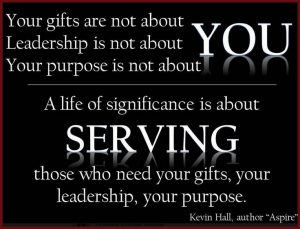
Kevin Hall is 100% correct in his statement that “a life of significance is about serving those who need your gifts, your leadership, your purpose”. When a leader serves their team the whole focus of their being is how can I better the lives of my team members better. This attitude generates good will and like a smile freely given causes another to smile, so the leader that serves causes those been served to want to do likewise. This is true leadership; this is the type of leader I personally love to be led by.

What type of leader are you?

A leadership book that gets into the trenches with the leader – Action orientated

cropped-new-manager-cover.jpgNothing prepared me for all the prickly engagements I faced as a leader, such as the time a direct report challenged me in front of the team telling me they don’t like me and the first time I had to performance rate a team member and they disagreed with everything I said. There was also the time when a team member shouted back at me in a team meeting as they felt I was victimizing them.

The training and preparation I had in leadership was mainly focused on the operational components of the role such as a “to do list” and a “tick box” exercise that I met the compliance training on what the role entails. I also read a couple of books that gave me strategies to execute, however all these things never got up close and personal to help me understand what to do as a leader in the work place.

This led me to the conclusion that there was a need for more to be done to help a leader understand what was really going to happen when they lead people. This is the reason I wrote “The New Manager – How to become a leader in 52 simple steps”. The title plays on the words manager and leader as anyone that is responsible for people will need to do both in order to be truly effective (manage and lead). The fifty two also tries to connect the leader with the 52 weeks there are in the year thus showing that the book encompasses all of what a leader may go through during a calendar year.

The book is jam packed with “true stories” that have happened in the workplace to help the leader understand the likely scenarios they will face. There are also six core themes, these being: how to bond with your team, how to build credibility, how to develop individuals, how to develop the team, how to deal with storms, how to performance rate both the individual and the team as a whole. Every chapter is full of questions to help the leader unpack what their personal views are. The leader should quickly be able to say, yes, I have seen that happen in the work place. It had to be real in order for it to make a difference.

In the book I don’t offer new theories and six easy steps to be the best leader in the company. I do offer practical guidance on how to deal with the numerous challenges you as leader are likely to face.

I do hope that you purchase a copy and that it achieves its intended purpose and that is…… Leaders are primarily there to develop the people they lead. That is the core, the heartbeat of what true leadership is and the more leaders we have that develop the individuals they lead the better and the brighter all our futures will become.

All the best Steven